Buy sleepover.eu ?
We are moving the project
sleepover.eu .
Are you interested in purchasing the domain
sleepover.eu ?
domain@kv-gmbh.de · 0541-91531010
Buy sleepover.eu ?
What is proton donation and proton acceptance in chemistry?
Proton donation and proton acceptance are key concepts in acid-base chemistry. Proton donation refers to the transfer of a hydrogen ion (proton) from one substance to another. This typically occurs when an acid donates a proton to a base. Proton acceptance, on the other hand, involves the acceptance of a proton by a substance, often a base, leading to the formation of a new chemical species. These processes are fundamental to understanding the behavior of acids and bases in chemical reactions. **
What is meant by proton donors and proton acceptors?
Proton donors are substances that can donate a proton (H+) to another substance. This typically involves the release of a hydrogen ion. Proton acceptors, on the other hand, are substances that can accept a proton from another substance. This typically involves the uptake of a hydrogen ion. In the context of acid-base reactions, proton donors are acids, while proton acceptors are bases. **


Similar search terms for Proton
Top-Angebote
Products related to Proton:
-
Multisell Products Hub Kids Outdoor Games Sensory Integration Toss Set For Family Party And Parent Child Activities Kids Outdoor Games Sensory Integration Toss Set For Family Party And Parent Child ActivitiesBring energy, laughter, and meaningful bonding into playtime with this 6 pcs engaging kids outdoor games set designed to keep children active and connected. This interactive tossing game combines fun and development, making it perfect for improving...69,97 $*Shipping: 0,00 $Secure redirect to the provider
-
Character Options Peppa Pig Sleepover Toy - Ultra-Soft Plush Bedtime Companion for Kids 3+ - MulticolourSleepover Peppa is dressed in adorable pink pajamas and includes a sleeping bag with a carry handle and hidden compartment for small items. It plays a lullaby when the heart on Peppa's chest is pressed and features soft lighting for a calming bedtime routine. Designed for children aged 3 years and older.18,22 £*Shipping: 3,95 £Secure redirect to the provider
-
Wine.com """Snacks Plus Basket""""""This savory gift basket brings together everything needed for an effortless charcuterie spread, all presented in a stylish two-tone metal basket. Hard salami, gourmet cheese spread and stone ground mustard are joined by crunchy favorites like..."49,99 $*Shipping: 0,00 $Secure redirect to the provider
-
Funko Pop! Movies Carrie (Telekinesis) Vinyl Figure #1247 - CollectablesBring a memorable horror-film moment to your collection with this Funko Pop! Movies figure of Carrie using her telekinetic powers. Dressed for the prom and marked with blood-effect detailing, the stylized vinyl figure captures the character during the film's dramatic climax. This official Funko Pop! figure is based on the telekinetic version of Carrie, wearing a blood-covered prom dress. It is presented in an illustrated window display box and is suitable for displaying boxed or out of its packaging. The vinyl figure measures approximately 9.5 cm tall, making it a great addition to horror-themed displays and Funko Pop! collections. This is the standard Carrie release, identified by Funko item number 63981 and barcode 889698639811.11,67 £*Shipping: 3,95 £Secure redirect to the provider



-
What determines a proton donor and a proton acceptor?
A proton donor is a substance that can release a proton (H+) in a chemical reaction, while a proton acceptor is a substance that can accept a proton. This ability is determined by the presence of a hydrogen atom with a positive charge (H+) in the molecule. In general, substances with a lone pair of electrons, such as a hydroxide ion (OH-) or an amine group (NH2), can act as proton acceptors, while substances with a hydrogen atom bonded to an electronegative atom, such as a hydrochloric acid (HCl) or acetic acid (CH3COOH), can act as proton donors. **
-
Why are carboxylic acids proton donors and amines proton acceptors?
Carboxylic acids are proton donors because they contain a highly electronegative oxygen atom that can stabilize the resulting carboxylate anion by delocalizing the negative charge. Amines, on the other hand, are proton acceptors because they contain a lone pair of electrons on the nitrogen atom that can readily accept a proton to form a positively charged ammonium ion. This ability to donate or accept protons is due to the presence of functional groups in these molecules that can easily gain or lose a hydrogen ion in solution. **
-
Are there only proton-proton collisions in the particle accelerator?
No, there are not only proton-proton collisions in the particle accelerator. Particle accelerators can also collide protons with other particles such as electrons or heavy ions like lead or gold. These collisions are important for studying different aspects of particle physics and for exploring the fundamental forces and particles that make up the universe. By colliding different types of particles, scientists can gain a better understanding of the fundamental building blocks of matter and the forces that govern their interactions. **
-
How secure is Proton?
Proton is considered to be a highly secure email service. It offers end-to-end encryption for emails, meaning that only the sender and recipient can read the contents of the messages. Proton also uses strong encryption protocols to protect user data and has a strict privacy policy that ensures user information is not shared with third parties. Additionally, Proton is based in Switzerland, known for its strong privacy laws, adding an extra layer of security for users. **
What are proton currents?
Proton currents refer to the flow of protons, which are positively charged particles, through a medium. This flow of protons can occur in various contexts, such as in biological systems, in proton-conducting materials, or in the context of proton exchange membrane fuel cells. Proton currents are important in many physiological processes, such as the generation of energy in cells through the process of oxidative phosphorylation. In the context of proton-conducting materials and fuel cells, proton currents are important for the generation of electrical energy. **
What is proton decay?
Proton decay is a theoretical process in which a proton, one of the fundamental particles that make up an atom's nucleus, decays into lighter particles. This process is predicted by some grand unified theories (GUTs) that seek to unify the electromagnetic, weak, and strong nuclear forces. If proton decay were to occur, it would have profound implications for our understanding of the fundamental forces and particles in the universe. However, despite extensive experimental efforts, proton decay has not been observed, and its theoretical prediction remains unconfirmed. **
Top-Angebote
Products related to Proton:
-
Of Wheels Deals Geely Proton Ultra Bright LED Trunk Light Upgrade Geely Proton Ultra Bright LED Trunk Light UpgradeBring a brighter and more convenient driving experience to your vehicle with this premium LED trunk light designed for Geely EX2 and Proton e.MAS 5 models. This upgrade enhances trunk visibility while adding a stylish modern touch to your car...47,97 $*Shipping: 0,00 $Secure redirect to the provider
-
Perfect Picks Market Three Legged Race Tie Strap For Outdoor Team Games And Partner Activities Three Legged Race Tie Strap For Outdoor Team Games And Partner ActivitiesMake outdoor play more interactive with this threelegged race tie strap designed for twoperson running games and friendly competitions. Made from cloth, this simple game accessory helps partners coordinate their movements while participating in...44,97 $*Shipping: 0,00 $Secure redirect to the provider
-
Multisell Products Hub Kids Outdoor Games Sensory Integration Toss Set For Family Party And Parent Child Activities Kids Outdoor Games Sensory Integration Toss Set For Family Party And Parent Child ActivitiesBring energy, laughter, and meaningful bonding into playtime with this 6 pcs engaging kids outdoor games set designed to keep children active and connected. This interactive tossing game combines fun and development, making it perfect for improving...69,97 $*Shipping: 0,00 $Secure redirect to the provider
-
Character Options Peppa Pig Sleepover Toy - Ultra-Soft Plush Bedtime Companion for Kids 3+ - MulticolourSleepover Peppa is dressed in adorable pink pajamas and includes a sleeping bag with a carry handle and hidden compartment for small items. It plays a lullaby when the heart on Peppa's chest is pressed and features soft lighting for a calming bedtime routine. Designed for children aged 3 years and older.18,22 £*Shipping: 3,95 £Secure redirect to the provider
-
What is proton donation and proton acceptance in chemistry?
Proton donation and proton acceptance are key concepts in acid-base chemistry. Proton donation refers to the transfer of a hydrogen ion (proton) from one substance to another. This typically occurs when an acid donates a proton to a base. Proton acceptance, on the other hand, involves the acceptance of a proton by a substance, often a base, leading to the formation of a new chemical species. These processes are fundamental to understanding the behavior of acids and bases in chemical reactions. **
-
What is meant by proton donors and proton acceptors?
Proton donors are substances that can donate a proton (H+) to another substance. This typically involves the release of a hydrogen ion. Proton acceptors, on the other hand, are substances that can accept a proton from another substance. This typically involves the uptake of a hydrogen ion. In the context of acid-base reactions, proton donors are acids, while proton acceptors are bases. **
-
What determines a proton donor and a proton acceptor?
A proton donor is a substance that can release a proton (H+) in a chemical reaction, while a proton acceptor is a substance that can accept a proton. This ability is determined by the presence of a hydrogen atom with a positive charge (H+) in the molecule. In general, substances with a lone pair of electrons, such as a hydroxide ion (OH-) or an amine group (NH2), can act as proton acceptors, while substances with a hydrogen atom bonded to an electronegative atom, such as a hydrochloric acid (HCl) or acetic acid (CH3COOH), can act as proton donors. **
-
Why are carboxylic acids proton donors and amines proton acceptors?
Carboxylic acids are proton donors because they contain a highly electronegative oxygen atom that can stabilize the resulting carboxylate anion by delocalizing the negative charge. Amines, on the other hand, are proton acceptors because they contain a lone pair of electrons on the nitrogen atom that can readily accept a proton to form a positively charged ammonium ion. This ability to donate or accept protons is due to the presence of functional groups in these molecules that can easily gain or lose a hydrogen ion in solution. **
Similar search terms for Proton
-
Wine.com """Snacks Plus Basket""""""This savory gift basket brings together everything needed for an effortless charcuterie spread, all presented in a stylish two-tone metal basket. Hard salami, gourmet cheese spread and stone ground mustard are joined by crunchy favorites like..."49,99 $*Shipping: 0,00 $Secure redirect to the provider
-
Funko Pop! Movies Carrie (Telekinesis) Vinyl Figure #1247 - CollectablesBring a memorable horror-film moment to your collection with this Funko Pop! Movies figure of Carrie using her telekinetic powers. Dressed for the prom and marked with blood-effect detailing, the stylized vinyl figure captures the character during the film's dramatic climax. This official Funko Pop! figure is based on the telekinetic version of Carrie, wearing a blood-covered prom dress. It is presented in an illustrated window display box and is suitable for displaying boxed or out of its packaging. The vinyl figure measures approximately 9.5 cm tall, making it a great addition to horror-themed displays and Funko Pop! collections. This is the standard Carrie release, identified by Funko item number 63981 and barcode 889698639811.11,67 £*Shipping: 3,95 £Secure redirect to the provider
-
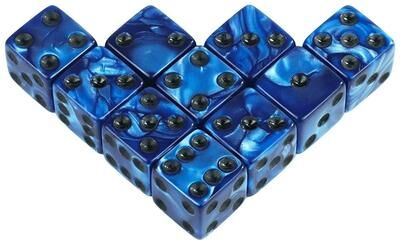
Inspired Finds 16mm Marble Style D6 Dice Set For Board Games And Math Activities blueBring a polished, stoneinspired look to your favorite games with this 16mm marble style dice set. Each sixsided die features a swirling aventurineinspired pattern that gives every piece a distinctive appearance while keeping the numbered dots easy...34,99 $*Shipping: 0,00 $Secure redirect to the provider
-
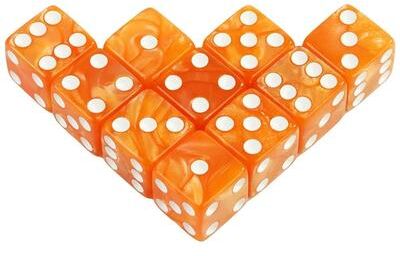
Inspired Finds 16mm Marble Style D6 Dice Set For Board Games And Math Activities orangeBring a polished, stoneinspired look to your favorite games with this 16mm marble style dice set. Each sixsided die features a swirling aventurineinspired pattern that gives every piece a distinctive appearance while keeping the numbered dots easy...34,99 $*Shipping: 0,00 $Secure redirect to the provider
-
Are there only proton-proton collisions in the particle accelerator?
No, there are not only proton-proton collisions in the particle accelerator. Particle accelerators can also collide protons with other particles such as electrons or heavy ions like lead or gold. These collisions are important for studying different aspects of particle physics and for exploring the fundamental forces and particles that make up the universe. By colliding different types of particles, scientists can gain a better understanding of the fundamental building blocks of matter and the forces that govern their interactions. **
-
How secure is Proton?
Proton is considered to be a highly secure email service. It offers end-to-end encryption for emails, meaning that only the sender and recipient can read the contents of the messages. Proton also uses strong encryption protocols to protect user data and has a strict privacy policy that ensures user information is not shared with third parties. Additionally, Proton is based in Switzerland, known for its strong privacy laws, adding an extra layer of security for users. **
-
What are proton currents?
Proton currents refer to the flow of protons, which are positively charged particles, through a medium. This flow of protons can occur in various contexts, such as in biological systems, in proton-conducting materials, or in the context of proton exchange membrane fuel cells. Proton currents are important in many physiological processes, such as the generation of energy in cells through the process of oxidative phosphorylation. In the context of proton-conducting materials and fuel cells, proton currents are important for the generation of electrical energy. **
-
What is proton decay?
Proton decay is a theoretical process in which a proton, one of the fundamental particles that make up an atom's nucleus, decays into lighter particles. This process is predicted by some grand unified theories (GUTs) that seek to unify the electromagnetic, weak, and strong nuclear forces. If proton decay were to occur, it would have profound implications for our understanding of the fundamental forces and particles in the universe. However, despite extensive experimental efforts, proton decay has not been observed, and its theoretical prediction remains unconfirmed. **
* All prices are inclusive of VAT and, if applicable, plus shipping costs. The offer information is based on the details provided by the respective shop and is updated through automated processes. Real-time updates do not occur, so deviations can occur in individual cases. ** Note: Parts of this content were created by AI.